IHC Controls


Proper controls are essential for assessing staining specificity. Negative controls ensure that the observed signals are due to the presence of the target antigen and not due to non-specific binding or other artifacts. SYSY Antibodies recommends the following control experiments to ensure staining specificity.

Slide Without Primary Antibody and Secondary System

In chromogenic IHC, endogenous peroxidases or alkaline phosphatases can cause false positive staining if not properly blocked. Omitting both the primary antibody and the secondary system in the staining protocol reveals endogenous enzyme activity.

  • To block endogenous peroxidases: Use 3% H₂O₂
  • To block endogenous alkaline phosphatases: Use 1 mM Levamisole

Certain tissue-inherent pigments may also be mistaken for DAB signals due to their yellow-brown color, including:

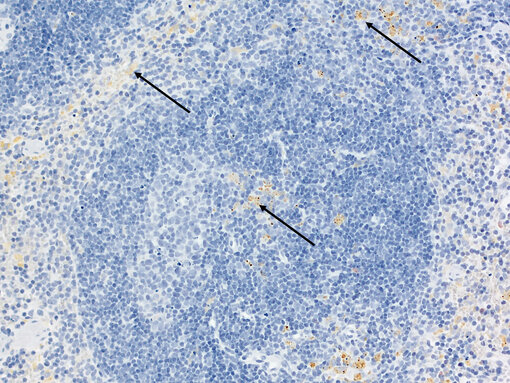
  • Hemosiderin (e.g., liver, spleen, bone marrow) (Figure 1)
  • Bilirubin (liver)
  • Lipofuscin (e.g., nerve cells, heart, liver)
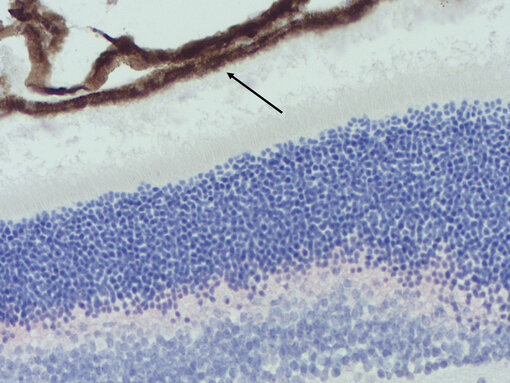
  • Melanin (e.g., corneal endothelial cells in brown eyes, human skin) (Figure 2)
     
Siderin (arrows, yellow) in formalin fixed paraffin embedded (FFPE) mouse spleen. Nuclei have been visualized by hematoxylin staining (blue).
Melanin (arrow, brown) in formalin fixed paraffin embedded (FFPE) mouse retina. Nuclei have been visualized by hematoxylin staining (blue).

Figure 1: Siderin (arrows, yellow) in formalin fixed paraffin embedded (FFPE) mouse spleen. Nuclei have been visualized by hematoxylin staining (blue).


Figure 2: Melanin (arrow, brown) in formalin fixed paraffin embedded (FFPE) mouse retina. Nuclei have been visualized by hematoxylin staining (blue).

In IF, autofluorescence is a widely occurring phenomenon in cells and tissues caused by endogenous molecules such as:

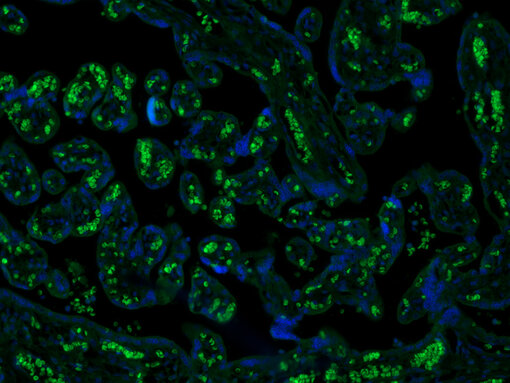
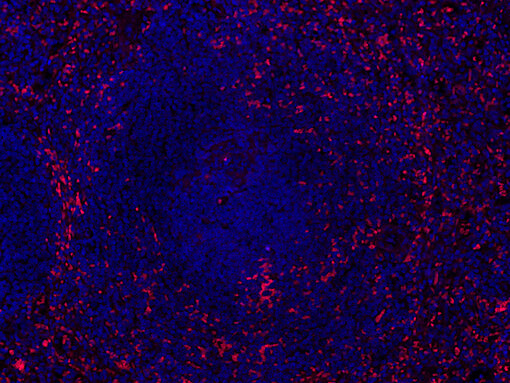
  • Heme group in red blood cells (Figure 3&4)
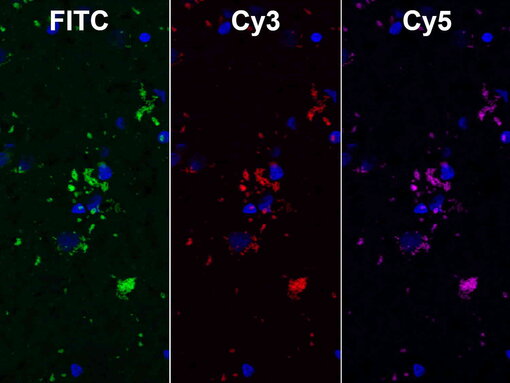
  • Lipofuscin (e.g., skeletal muscles, neurons, heart; accumulates with age) (Figure 5)
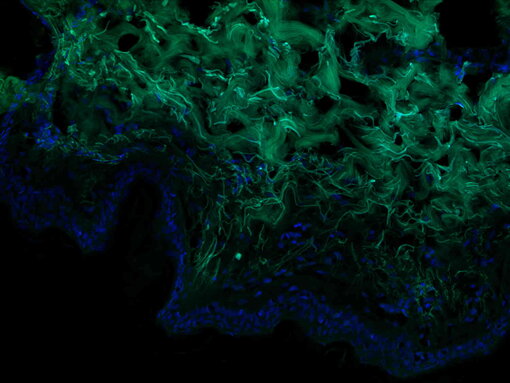
  • Collagen (ubiquitous structural protein) (Figure 6)
  • Elastin (e.g., skin, lung, large arteries)
  • NAD(P)H (e.g. liver; coenzyme)
  • Flavins (mitochondria)
     
Autofluorescence in formalin fixed paraffin embedded (FFPE) human placenta. Autofluorescence of red blood cells is shown in green. Nuclei have been visualized by DAPI staining (blue).
Figure 4: Autofluorescence in formalin fixed paraffin embedded (FFPE) human spleen. Autofluorescence of red blood cells is shown in red. Nuclei have been visualized by DAPI staining (blue).

Figure 3: Autofluorescence in formalin fixed paraffin embedded (FFPE) human placenta. Autofluorescence of red blood cells is shown in green. Nuclei have been visualized by DAPI staining (blue).

Figure 4: Autofluorescence in formalin fixed paraffin embedded (FFPE) human spleen. Autofluorescence of red blood cells is shown in red. Nuclei have been visualized by DAPI staining (blue).

Lipofuscin-associated autofluorescence in PFA fixed human brain in FITC, Cy3 and Cy5 channels. Nuclei have been visualized by DAPI staining (blue).
Collagen-associated autofluorescence in PFA fixed human skin in FITC channel. Nuclei have been visualized by DAPI staining (blue).

Figure 5: Lipofuscin-associated autofluorescence in PFA fixed human brain in FITC, Cy3 and Cy5 channels. Nuclei have been visualized by DAPI staining (blue).

Figure 6: Collagen-associated autofluorescence in PFA fixed human skin in FITC channel. Nuclei have been visualized by DAPI staining (blue).


Naturally fluorescent components in tissues can emit signals that overlap with fluorophore spectra, reducing the signal-to-noise ratio and complicating image interpretation. For example, collagen and NADH primarily emit in the blue to green range. Therefore, selecting fluorophores with emission in the red or far-red spectrum can help minimize spectral overlap. Lipofuscin, however, fluoresces broadly across the spectrum—most strongly between 500 and 695 nm—and can be particularly problematic, as its granular appearance may be mistaken for specific staining.

Autofluorescence can also arise from aldehyde-based fixation methods, such as formaldehyde or glutaraldehyde. Formalin-induced autofluorescence produces broad emission across a wide spectral range, including the blue, green, and red regions, further complicating signal detection. Consequently, appropriate controls and autofluorescence-reduction strategies are essential to ensure accurate analysis.

No Primary Antibody Control

Negative controls omitting the primary antibody help to identify false positive staining caused by the secondary system.

  • Non-specific binding of the secondary antibody may occur. Use a pre-adsorbed secondary antibody that matches the species of your tissue sample (e.g., use a mouse-adsorbed anti-rat secondary antibody when detecting a rat primary antibody in mouse tissue).
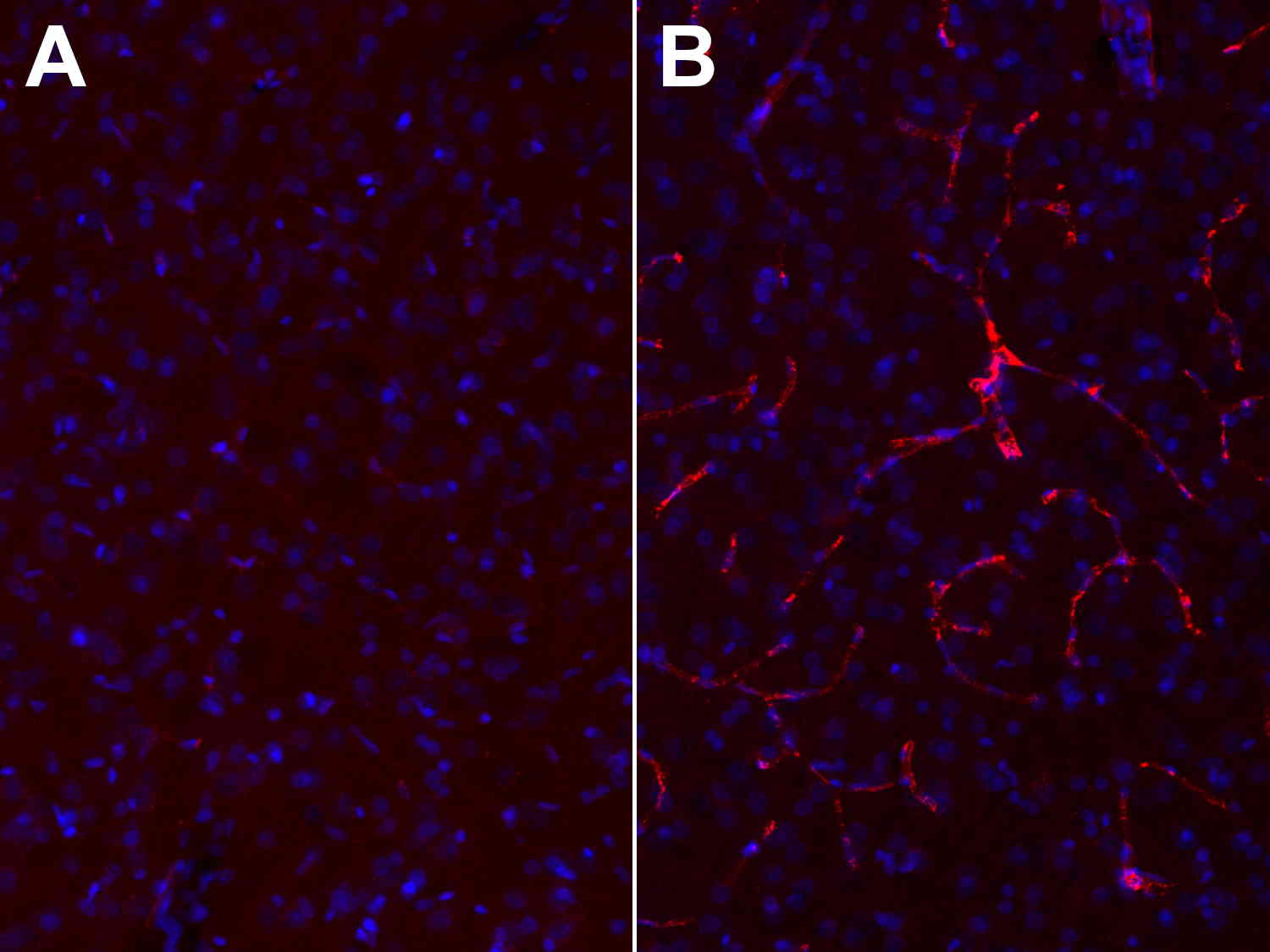
  • Mouse-on-mouse (or rat on rat) staining can result in endogenous IgG binding. This can be reduced by using mouse on mouse immunodetection kits or avoided by choosing an antibody from a different host species. Poorly or non-perfused tissues show staining in e.g. blood vessels in the brain (Figure 7).
  • Endogenous biotin interference can occur when using the ABC method. Block endogenous biotin by first applying unlabeled (Strept-)Avidin, followed by free biotin to block remaining binding sites (Avidin-Biotin Kit) or use a polymer-based detection system.
Perfusion control with a secondary anti-rat Cy3 labeled antibody in a rat brain. No blood vessels observed in the Cy3 channel in a successfully perfused brain (A) compared to a poorly perfused brain (B). Nuclei have been visualized by DAPI staining (blue).

Figure 7: Perfusion control with a secondary anti-rat Cy3 labeled antibody in a rat brain. No blood vessels observed in the Cy3 channel in a successfully perfused brain (A) compared to a poorly perfused brain (B). Nuclei have been visualized by DAPI staining (blue).

Tissue Type Controls

  • Positive Tissue Control: Use tissues known to express high levels of the target protein to confirm the staining protocol is effective.
  • Negative Tissue Control: Use tissues lacking the target protein to detect non-specific staining. 

Suitable samples include:

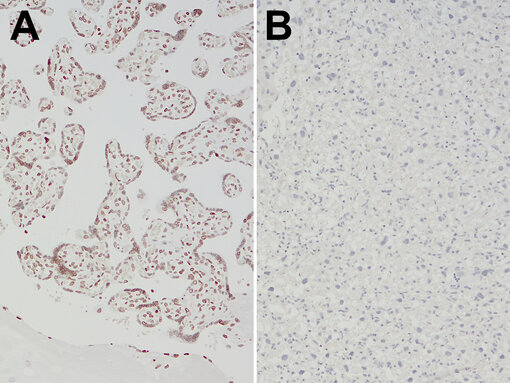
  • Tissues from other species when using species-specific antibodies (Figure 8)
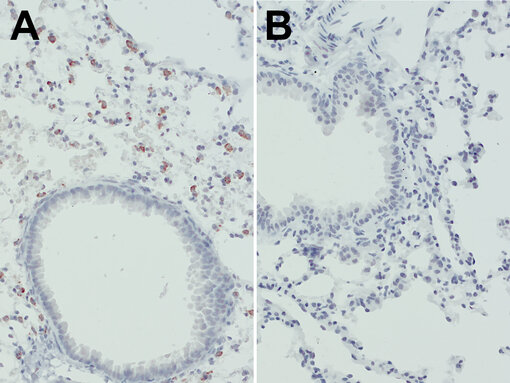
  • Tissues from knockout or knockdown models (Figure 9)
     
Validation of species-specific antibodies using tissues from positive and negative species. Indirect immunostaining of formalin fixed paraffin embedded (FFPE) sections of human placenta (A) and mouse placenta (B) with rabbit anti-human Lamin B1 antibody (cat. no. HS-404 018, dilution 1:1000, DAB, brown). Nuclei have been visualized by hematoxylin staining (blue).
Validation of primary antibodies using knockdown models. Indirect immunostaining of formalin fixed paraffin embedded (FFPE) mouse lung sections of wild type (A) or LAMP3 knock-out (B) mice with rat anti-LAMP3 antibody (cat. no. HS-391 017, dilution 1:000, DAB, brown). Nuclei have been visualized by hematoxylin staining (blue).

Figure 8: Validation of species-specific antibodies using tissues from positive and negative species. Indirect immunostaining of formalin fixed paraffin embedded (FFPE) sections of human placenta (A) and mouse placenta (B) with rabbit anti-human Lamin B1 antibody (cat. no. HS-404 018, dilution 1:1000, DAB, brown). Nuclei have been visualized by hematoxylin staining (blue). 

This antibody is suited to distinguish human cells from murine cells in humanized mouse models.
 

Figure 9: Validation of primary antibodies using knockdown models. Indirect immunostaining of formalin fixed paraffin embedded (FFPE) mouse lung sections of wild type (A) or LAMP3 knock-out (B) mice with rat anti-LAMP3 antibody (cat. no. HS-391 017, dilution 1:000, DAB, brown). Nuclei have been visualized by hematoxylin staining (blue).

Courtesy: Knock-out mouse lung tissue was kindly provided by Prof. Dr. Markus Damme, Christian-Albrechts-University of Kiel, Kiel, Germany


Certificates

ISO 9001 2015 Quality Management System and Green Lab Platinum certification level for sustaining laboratory processes.

Newsletter

Sign up for our newsletter and get the latest updates and news.
 

Please provide a valid E-Mail-Address
Please provide a valid First name
Please provide a valid Last name