Cat. No.: 191 603
Amount: 50 µg
Price:
$380.00


|

|
|
| Cat. No. 191 603 |
50 µg specific antibody, lyophilized. Affinity purified with the immunogen. Albumin and azide were added for stabilization. For reconstitution add 50 µl H2O to get a 1mg/ml solution in PBS. Then aliquot and store at -20°C to -80°C until use. Antibodies should be stored at +4°C when still lyophilized. Do not freeze! |
| Applications | |
| Immunogen | Synthetic peptide corresponding to residues near the carboxy terminus of mouse mGluR6 (UniProt Id: Q5NCH9) |
| Reactivity |
Reacts with: mouse (Q5NCH9), rat (P35349). Other species not tested yet. |
| Remarks |
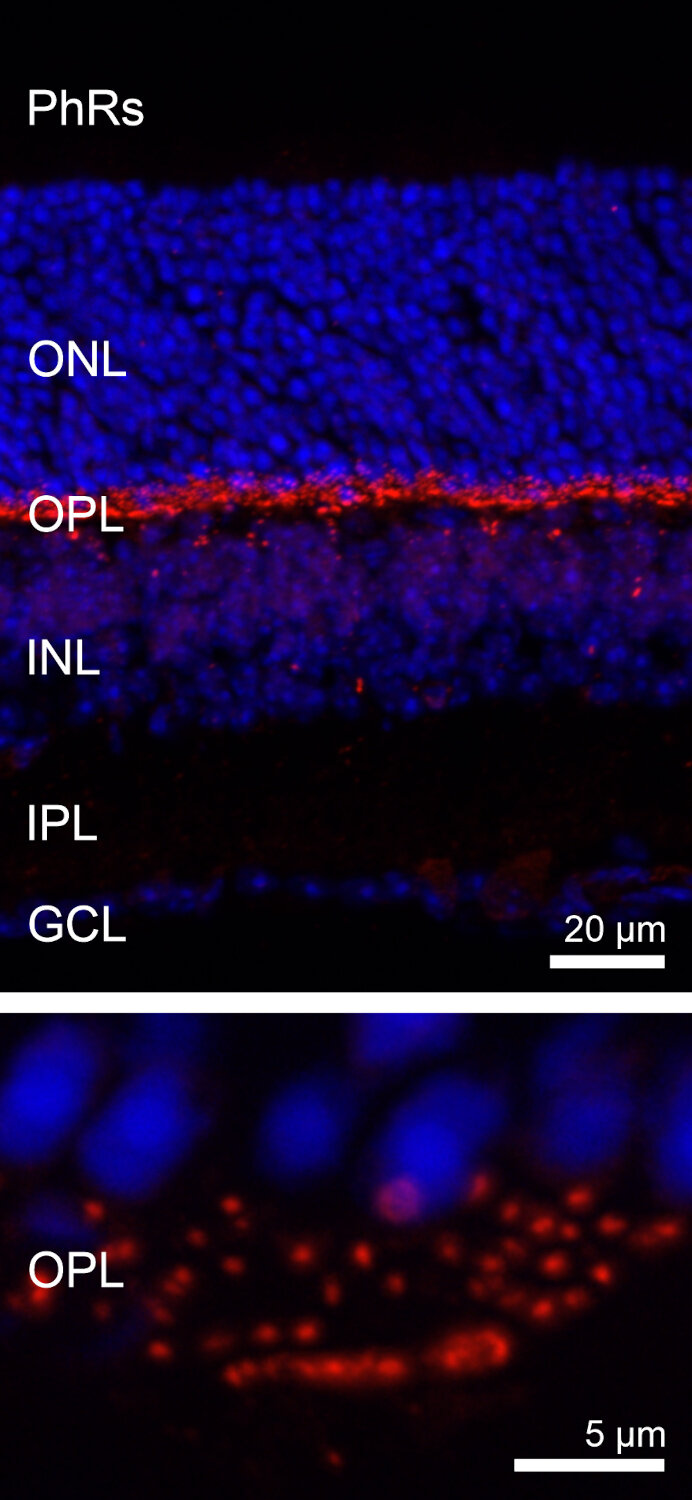
IHC: For optimal results in retina tissue, follow the retina protocol. |
| Data sheet | Data Sheet 191_603 |
|
|
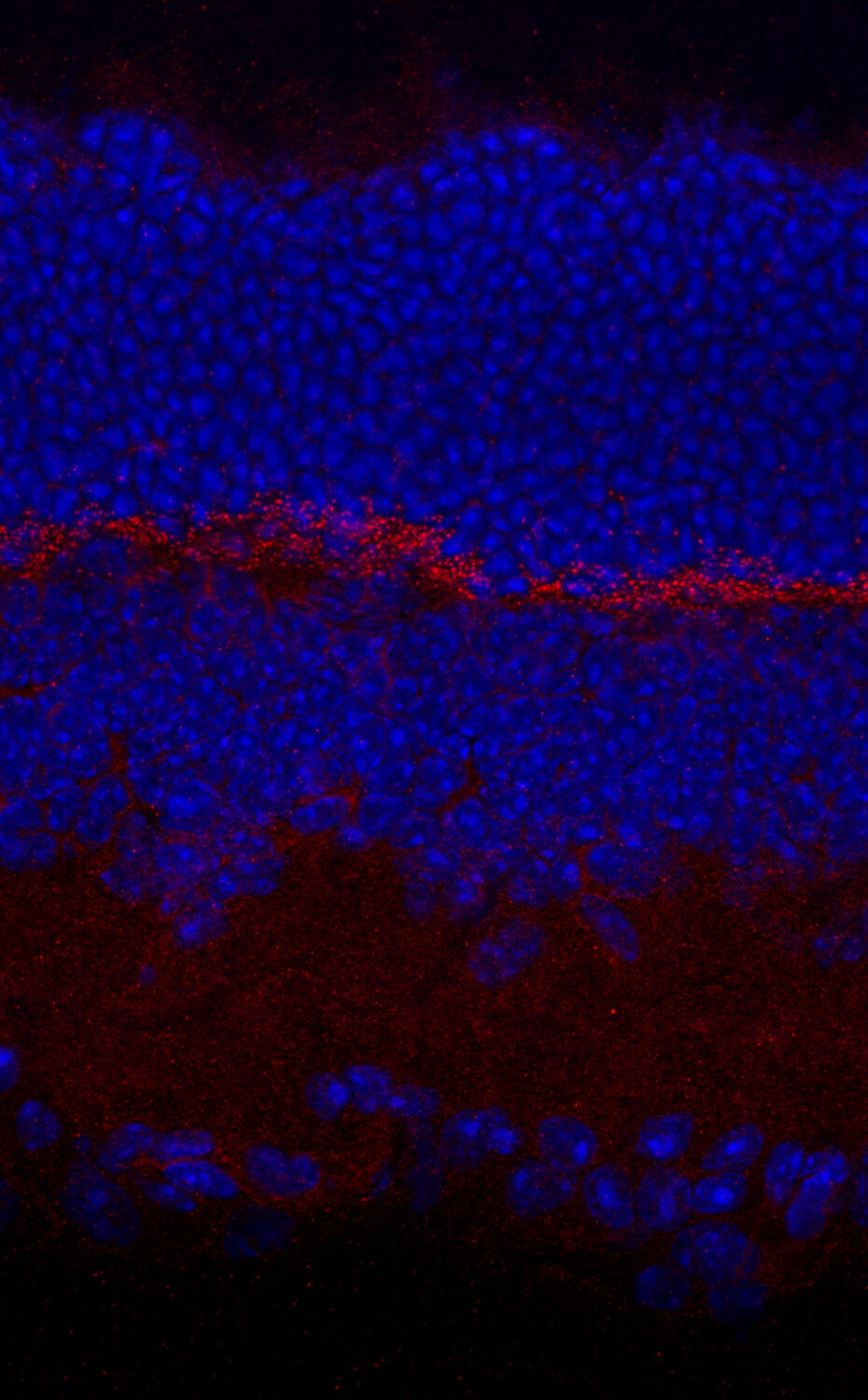
Immunofluorescence image of a mouse retina stained for mGluR6
Glutamate is the main excitatory neurotransmitter in the vertebrate nervous system and regulates a number of cellular signaling pathways. In addition to the ionotropic glutamate receptors of the NMDA, AMPA and kainate type, eight metabotropic receptors (mGluR1-8) have been described so far (1). This receptor family can be subdivided into three groups (2): Group I receptors (mGluR1, mGluR5) are activated by dihydroxyphenylglycine (DHPG) (3), group II receptors (mGluR2, mGluR3) by dicarboxycyclopropylglycine (DCG-IV), and group III receptors (mGluR4, mGluR6, mGluR7, mGluR8) by aminophosphonobutyrate (L-AP4) (4).
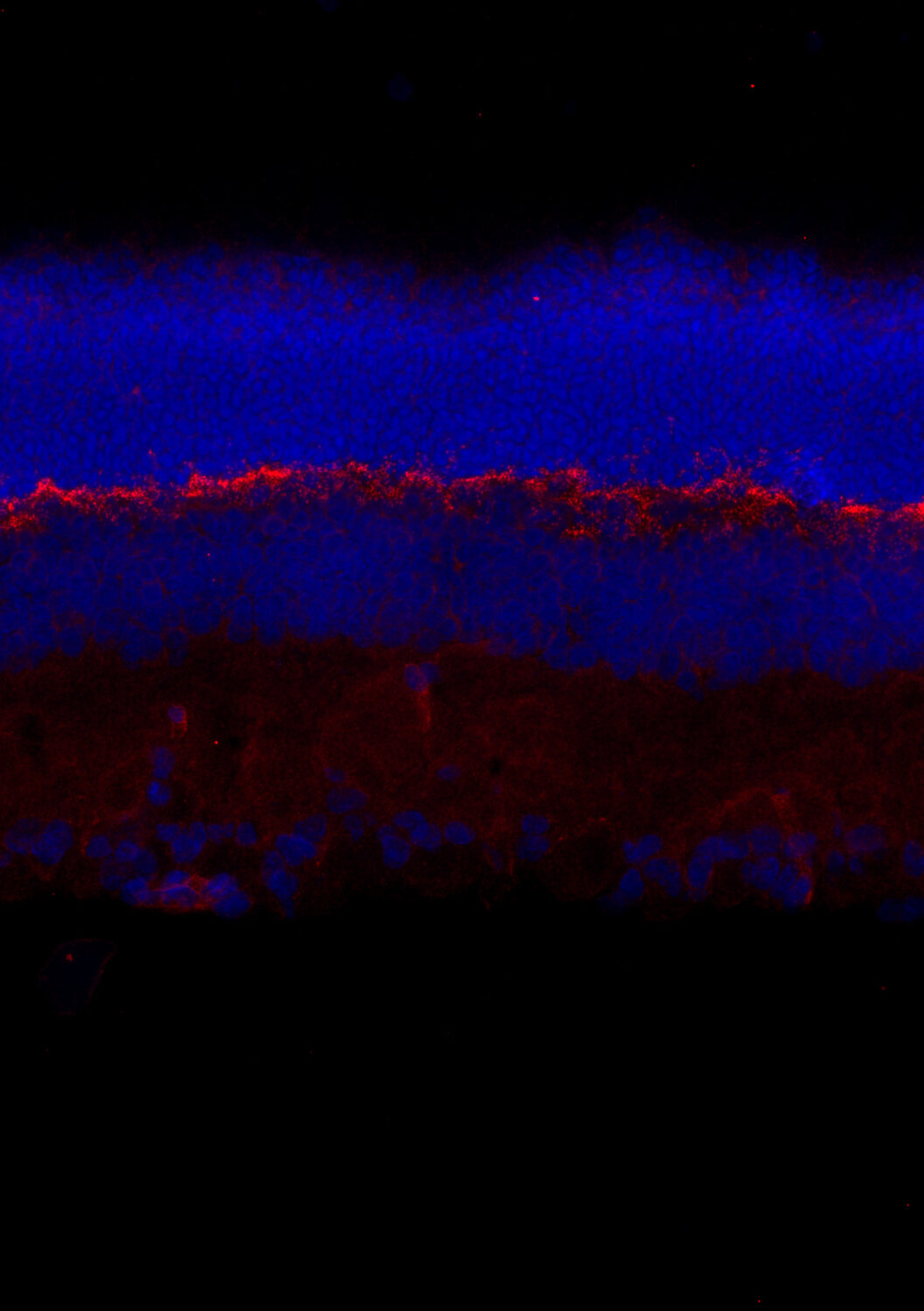
mGluR6 is involved in glutamate transmission from photoreceptors and is concentrated at postsynaptic sites of rod bipolar cells in the retina (5).
Certificates
ISO 9001 2015 Quality Management System and Green Lab Platinum certification level for sustaining laboratory processes.


Newsletter
Sign up for our newsletter and get the latest updates and news.