Cat. No.: 126 008
Amount: 50 µg
Price:
$420.00

|
|
|
| Cat. No. 126 008 |
50 µg purified recombinant IgG, lyophilized. Albumin and azide were added for stabilization. For reconstitution add 50 µl H2O to get a 1mg/ml solution in PBS. Then aliquot and store at -20°C to -80°C until use. Antibodies should be stored at +4°C when still lyophilized. Do not freeze! |
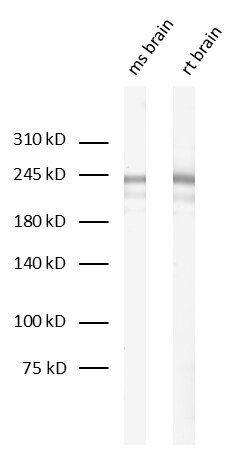
| Applications | |
| Clone | Rb147D6 |
| Subtype | IgG1 (κ light chain) |
| Immunogen | Recombinant protein corresponding to residues near the N-terminus of rat Munc13-1 (UniProt Id: Q62768) |
| Reactivity |
Reacts with: mouse (Q4KUS2), rat (Q62768). Other species not tested yet. |
| Remarks |
This antibody is a chimeric antibody based on the monoclonal rat antibody SY-147D6. The constant regions of the heavy and light chains have been replaced with rabbit specific sequences. The antibody can therefore be used with standard anti-rabbit secondary reagents. The antibody has been expressed in mammalian cells. |
| Data sheet | Data Sheet 126_008 |
|
|
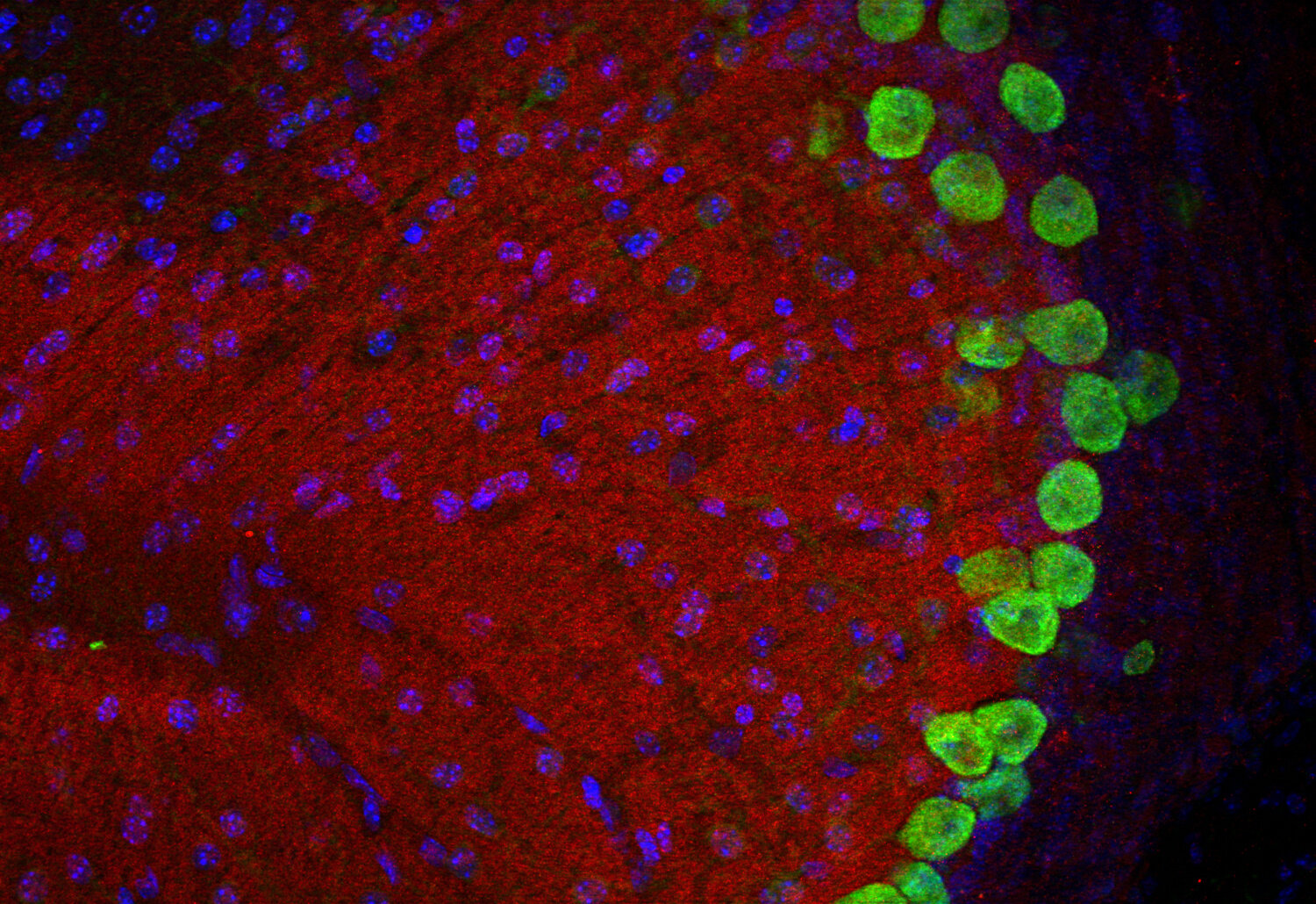
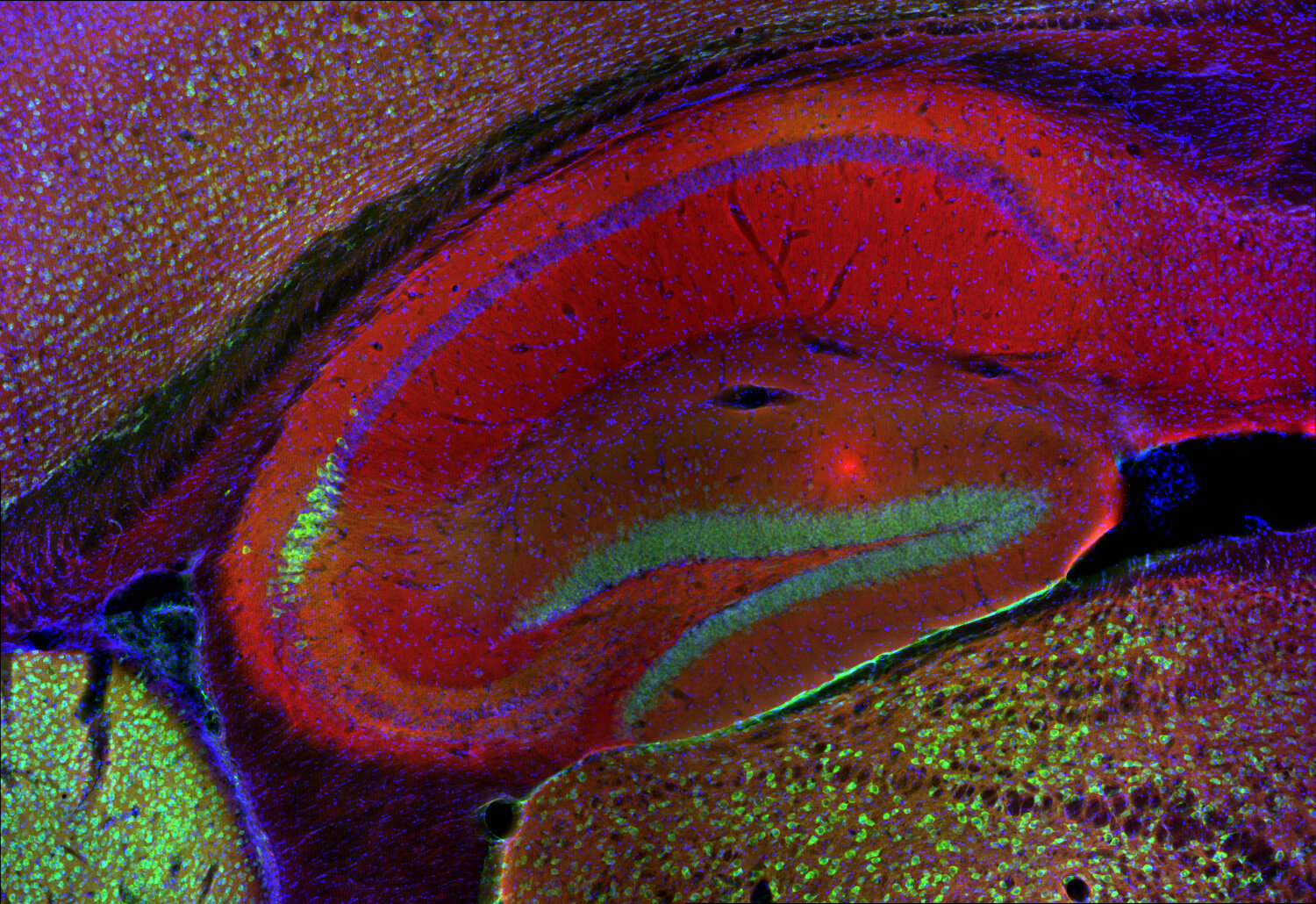
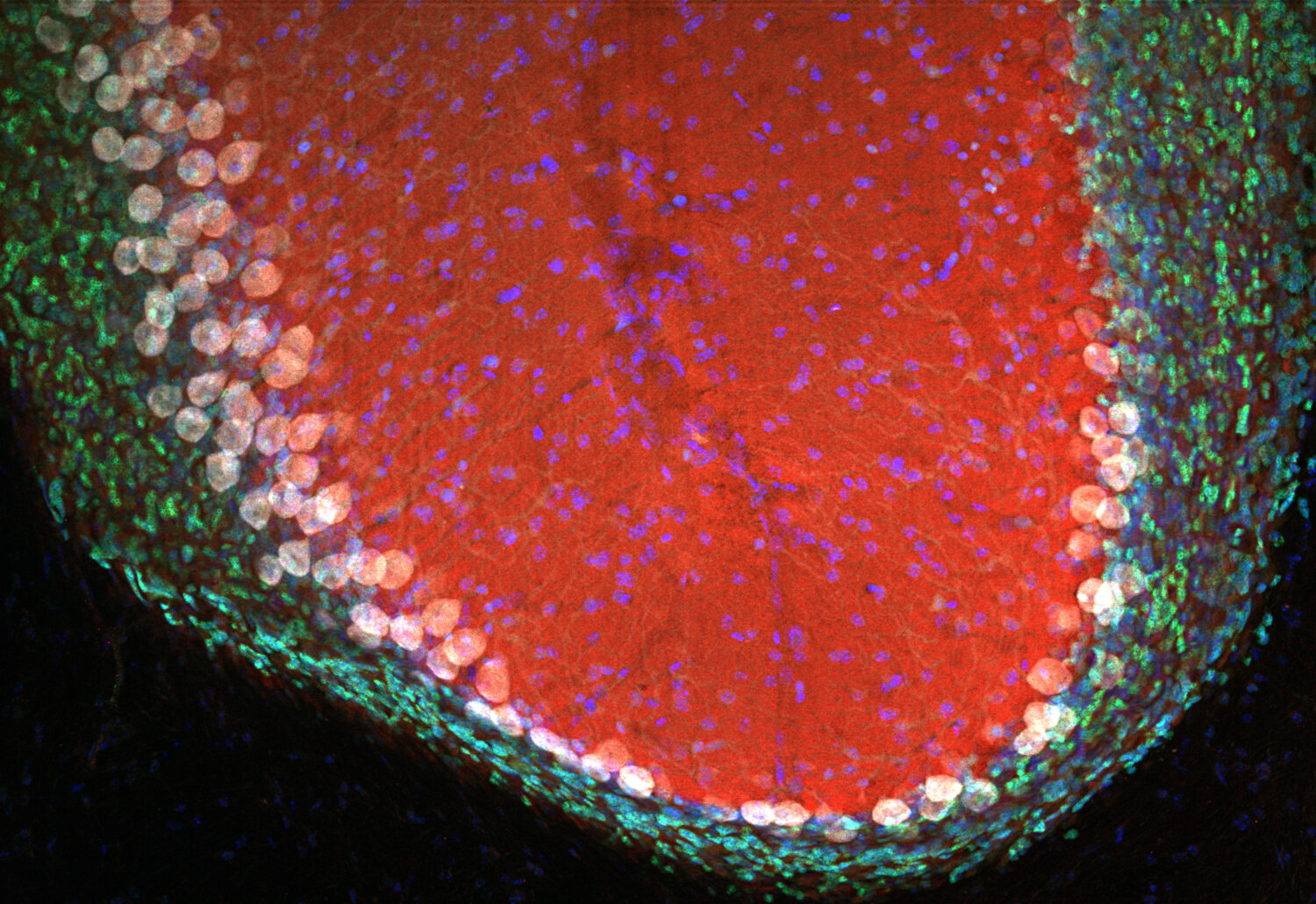
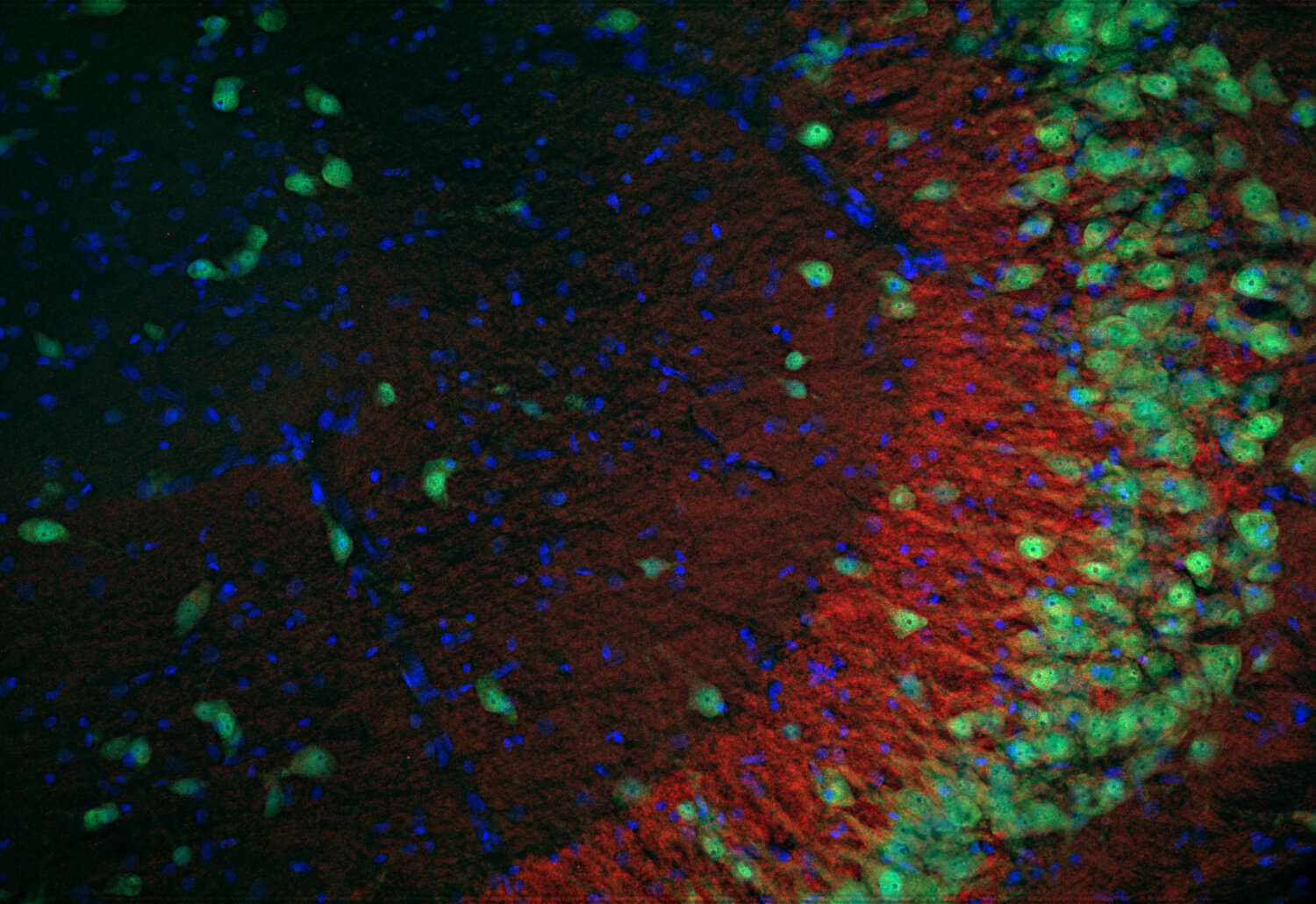
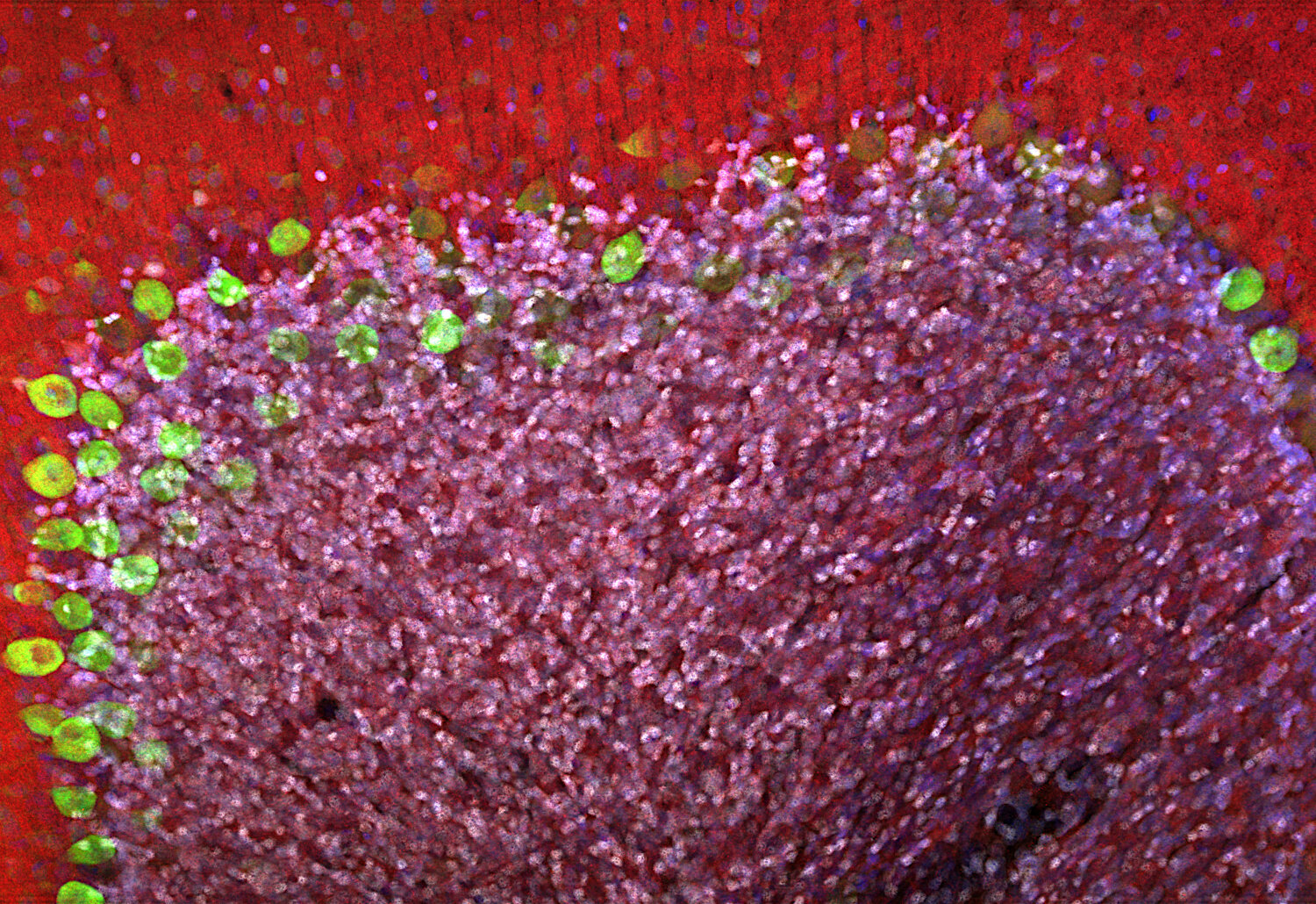
Munc13-1 (red) and PCP4 (green) staining in a mouse cerebellum section
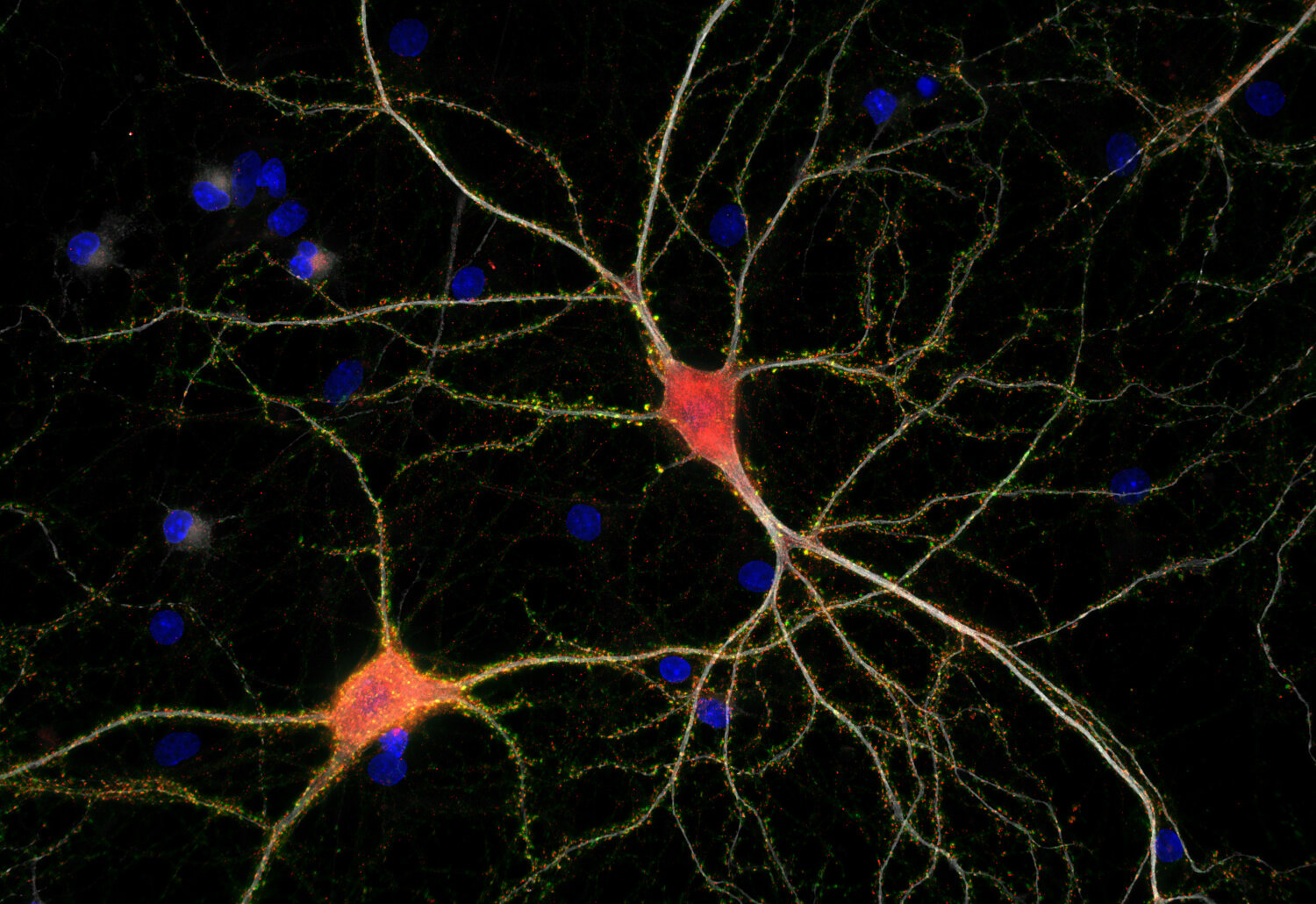
Munc13s are homologues of the C. elegans unc-13 gene product. Three brain-specific isoforms, Munc 13-1, -13-2, and -13-3, are expressed in mammals, where they localize to presynaptic terminals. All three isoforms share multiple regulatory domains that may mediate phorbol ester and diacylglycerol binding.
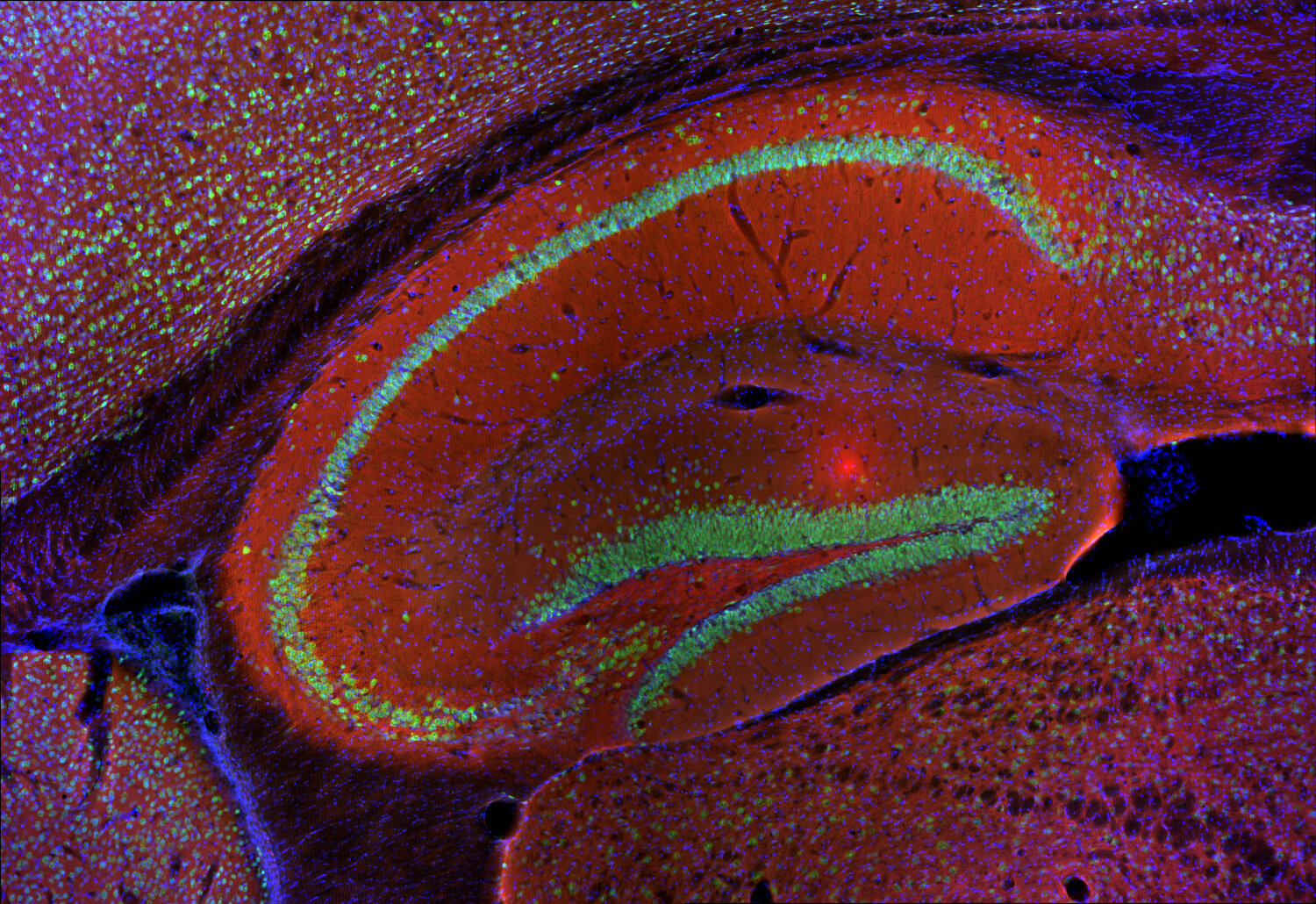
Munc13-1 shows the broadest expression pattern and is found in cortex, cerebellum, olfactory bulb, and hippocampus. Munc13-2 is mainly expressed in cortex and hippocampus, whereas Munc13-3 exhibits highest expression levels in cerebellum and pons. Munc13-1 interacts directly with a putative coiled-coil domain in the N-terminal part of syntaxin and is involved in synaptic vesicle priming. For Munc13-2 an additional ubiquitously expressed N-terminal splice variant (ubMunc13-2) has been described.
Munc13-3 has been shown to be involved in the regulation of cerebellar synaptic transmission and motor learning.
For more information on protein expression pattern, please refer to the overview image in our SYSY Antibodies ATLAS.
Certificates
ISO 9001 2015 Quality Management System and Green Lab Platinum certification level for sustaining laboratory processes.

Newsletter
Sign up for our newsletter and get the latest updates and news.